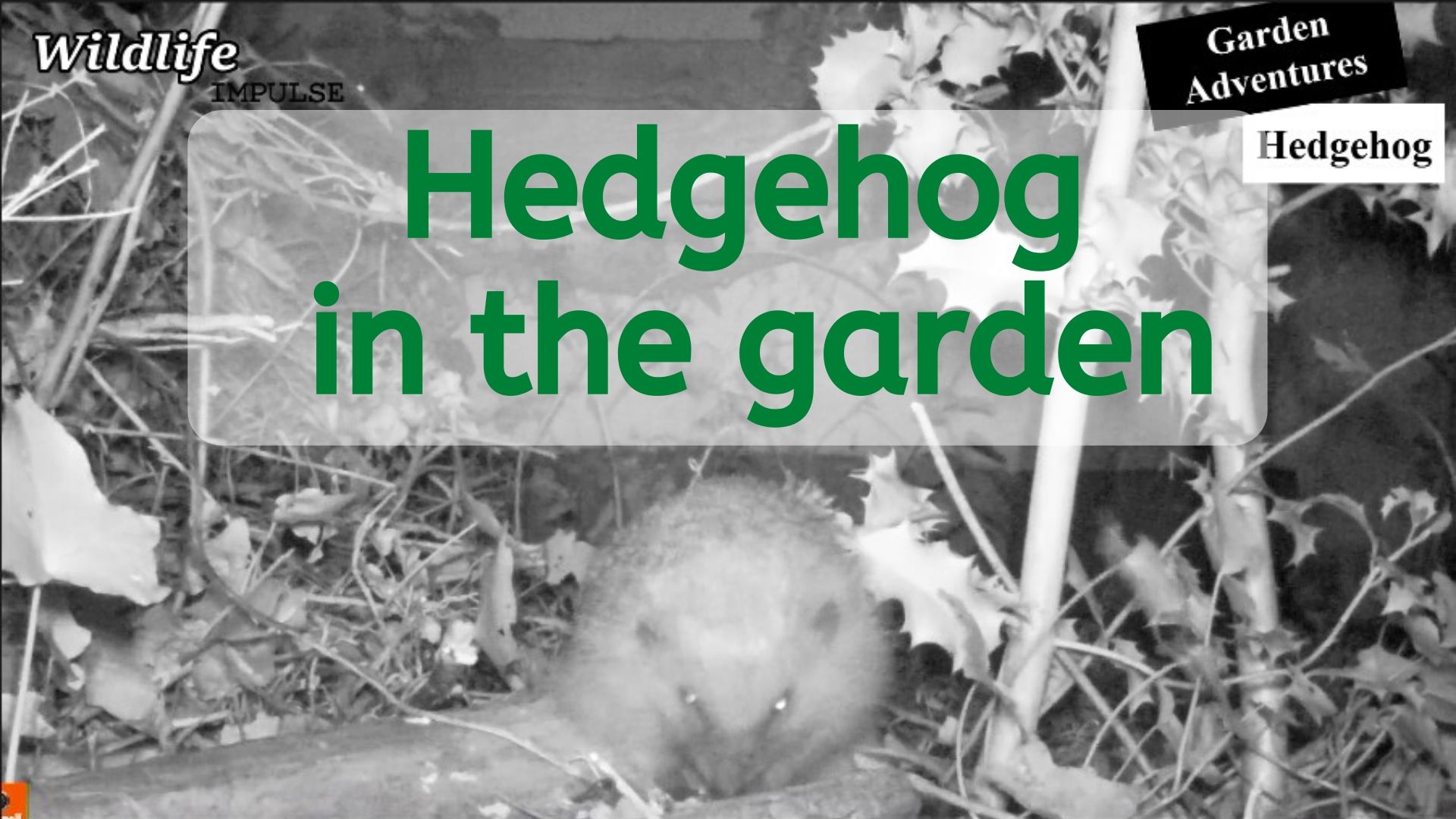
Hedgehog in the garden during the lockdown
I found some signs of a hedgehog in our garden. I set up a trail camera and I was lucky to get some more insights into the life of the hedgehog during these lockdown days. Hedgehogs are very useful animals. In this blog, I start with the story of me discovering more about the hedgehog in our garden. In the second part, you get a bit more information on the hedgehog itself as a species. In the end, I give some basic advice on what you can do for hedgehogs.
>> ook in het Nederlands beschikbaar (also available in Dutch)
Content
Hedgehog in the garden
Hedgehog: basic info
How can you help hedgehogs?
Full video compilation of the hedgehog discovery
A hedgehog in the garden
The first signs of the hedgehog in our garden.
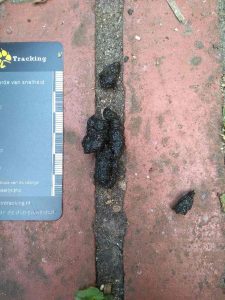
It all started with a conspicuous scat on the stairs in our garden. The scat contained some sand and some chitin from beetle skeletons. My guess was hedgehog. In order to find out, I put out my trail camera…
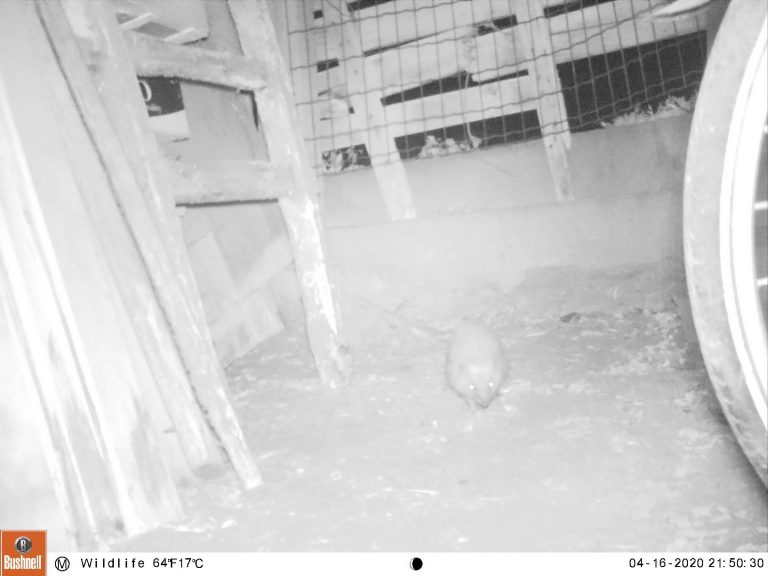
Hedgehog on the trail camera
The first night I could already confirm my thoughts: we had a hedgehog in our (city)garden. It seemed like the hedgehog had some difficulties to get on the stairs. How accessible is our garden?
I wasn’t expecting a hedgehog in our garden. Our garden is surrounded by a concrete wall. The obvious next questions I asked myself: Where does the hedgehog enter our garden? How often is the hedgehog passing by our garden?
I know hedgehogs needed a large area to patrol for food. It was definitely larger than our garden. I could only think about one place the hedgehog could leave our garden, through a little gate at the back of our garden. So it was easy to decide where to put my camera trap next…
Hedgehog adventures in our gardenYesterday I found some conspicuous scat in our garden. I put out my camera trap and I was right, we have a hedgehog in our garden... Although it seems like it has a bit of struggle conquering the stairs. It's great to see some wildlife in my own garden.
Posted by Wildlife Impulse on Thursday, 16 April 2020
The first footage of the hedgehog
Mammal research in my own garden
Hedgehog feeding in my gardenAfter I found out there is a hedgehog in our garden I 've set up some camera traps. Here the hedgehog is feeding on an earthworm. But hedgehogs also eat insects, snails, mushrooms, bird eggs, etc... This hedgehog is visiting the garden every night. Soon a longer version of the life of the hedgehog on YouTube. Sam Puls
Posted by Wildlife Impulse on Wednesday, 22 April 2020
Hedgehog feeding on an earthworm
The hedgehog: basic info
Hedgehog (Erinaceus europaeus)
Hedgehogs are insectivores. They are about 25 cm in length with a weight of about 1 kg. Hedgehogs are easily recognised by the spines on their back and upper part of the head. On average they have between 5 000 and 8 000 spines. They have a circular muscle straight under their skin, which makes it possible for the hedgehog the role into a ball if in danger.
Ecology
Hedgehogs need a variety of landscape elements with a decent understory for shelter and protection. They are also found in urban areas. On average, hedgehogs move around 3 km per night, so they need more than one garden to run around for potential food sources.
Hedgehogs are mostly active during the night and the twilight zones. Hedgehogs have an excellent smell to detect prey. They feed mostly on worms, snails, beetles, caterpillars, but occasionally go for eggs, rodents or mushrooms. Hedgehogs can eat up to 50g of food per night.
Hedgehogs are born naked, but already one hour after birth, their spines start to grow. After 5-6 weeks the young hedgehogs are independent
Hedgehogs are hibernating from October until March. They usually sleep in a pile of branches combined with some leaves. During their hibernation, they wake up sporadically. So actually it’s better to use the term ‘winter rest’ instead of hibernation. Before their winter rest, hedgehogs buildup an extra fat layer. During their winter rest, body temperature decreases from 36°C to 1-5°C.
How to recognize hedgehog tracks and signs
Insectivores have 5 toes on both forefeet and hindfeet. Hedgehogs have a wider front foot compared to the hindfoot. Prints kind of look like those of rats.
Hedgehog scats are quite large and black, 3-4 cm lang, 8-10mm diameter with a variable content that should include chitin parts of the skeleton of beetles.
Hedgehog and their enemies.
There are a couple of natural predators of the hedgehog such as badger and fox. To a lower extent some marten species such as pine marten and polecat. In Belgium, predation isn’t a very big issue. Traffic, on the other hand, causes yearly around 250 000 hedgehog deaths in Belgium.
How can you help hedgehogs?
Hedgehogs are often first heard. They can make different noises which can be louder than you would expect from such a small animal.
Next, we give a couple of basic tips to make your garden more hedgehog-friendly. First of all, you need to provide enough shelter so the hedgehog can hide. This is easily done by creating a pile of branches and wood and just leave parts of your garden ‘wild’. Hedgehogs also need food and water, but I’ll get more into detail later. Maybe even the most important factor is the accessibility of the garden. In a garden which is totally surrounded by walls, you will not find any hedgehogs. You can make some openings for hedgehogs.
Food and water
Don’t give hedgehogs milk! This is a misconception. Hedgehogs will get diarrhea and will dehydrate more. Support hedgehogs by creating some additional water source (during dry periods). Make sure the edges are not too steep, as it you don’t want to drown a hedgehog (or other wildlife).
When you leave some part of your garden ‘wild’, you will see there is enough food such as earthworms, snails, beetles, etc… available. Obviously don’t use insecticides or other snail poison as this will accumulate in the hedgehog and will be fatal. If you want to feed hedgehogs, go for dog or cat food.

Wildlife Impulse
Wildlife Impulse started as a blog to share experiences in the world of nature awareness and wildlife conservation.
Wildlife Impulse want to inform you about wildlife in different ways. Explore our website to learn more about it.


