
Wild Slovakia
Winter 2019-2020
Wild Slovakia project
The Wild Slovakia project is a collaboration between Wildlife Impulse and the NGO Bear Tracker Association (BTA). Together they have a lot of expertise in wildlife research and the wildlife in Slovakia. We explored the Slovak nature and collected mainly information about the large carnivores (wolves and lynx). Participants (citizen scientists) are trained and gain knowledge about animal tracks and signs. Additionally, we want to educate and create more awareness about wildlife and nature. Just as a reminder, we are not a commercial holiday company, but obviously we want all those participating in this project to have a great time.
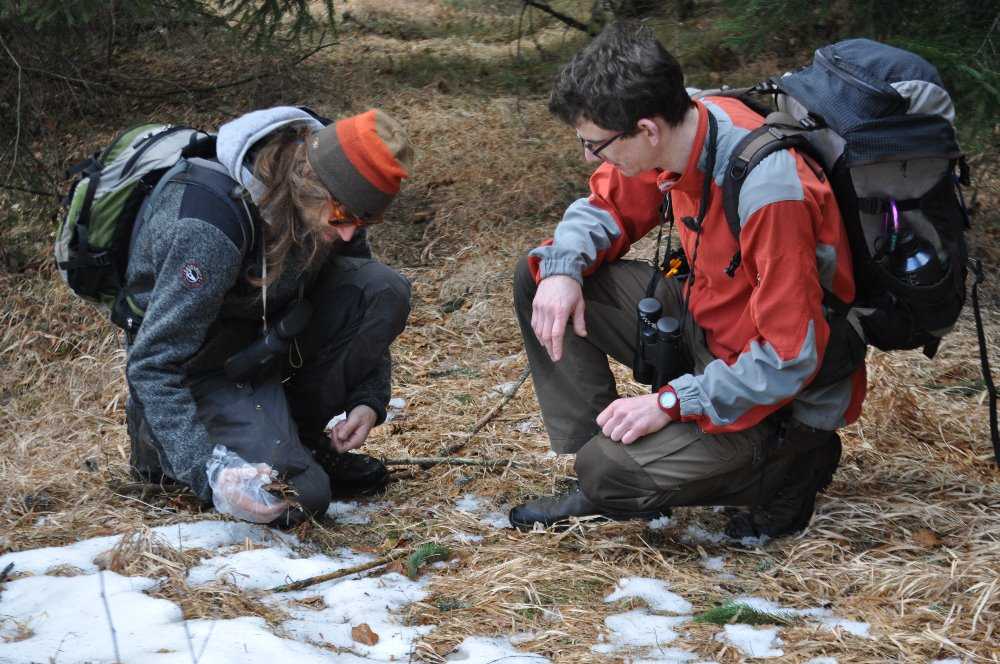
During the winter edition of the Wild Slovakia project, we focused on snow tracking and camera trapping of wildlife and more specifically about the large carnivores (wolf, lynx and bear). In this first year, our main purpose was to learn more about our study area. We want to get the basic knowledge about wolves and lynx (presence/absence, number of individuals, territories, how many wolf packs, the territory of wolf packs, how many wolves in each wolf pack, territory edges, …).
Data collection was done throughout the Winter 2019-2020. In this blog, I focus on our three main fieldwork weeks: trip 1 (28/12/19-2/1/20), trip 2 (31/1/20-6/2/20) and trip 3 (27/2/20-8/3/20). We stayed at The Bear Tracker Inn.
As there is still a lot of legal and illegal hunting going on, I will not go into too much detail on locations and stuff, but I go over our basic methodology and first results, where after I highlight some memorable stories from the field.
Data collection
During snow tracking, we recorded al our walks with a GPS device (or mobile device). We also recorded all large carnivore signs (bear, lynx, wolf). These signs could include tracks, scats, urine marking, sighting, etc…. I can already tell we had no sightings of large carnivores. This data collection was done through geotagged pictures and/or an ODK (Open Data Kit) form on a mobile device. When we had found wolf or lynx tracks outside of the National Parks, we sometimes followed them to gain more information on behaviour and movement. The scats we collected for diet analyses.
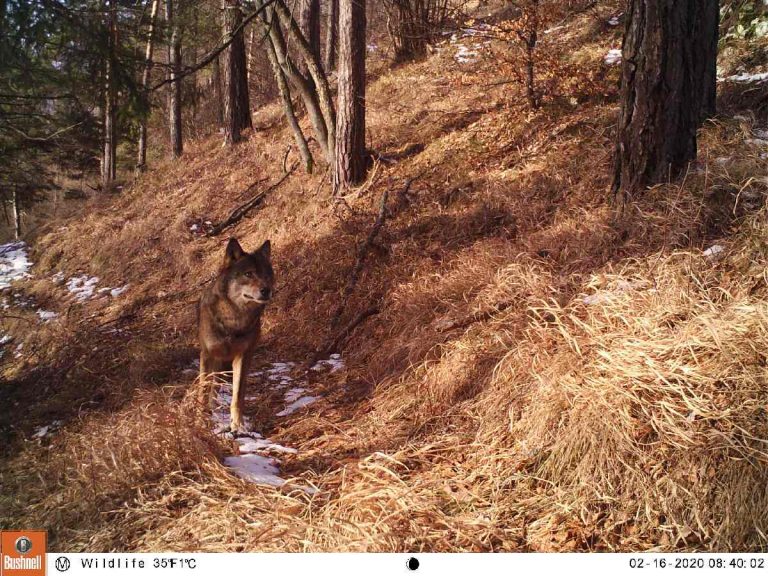
We are using camera traps to record wildlife in our study area, with a focus on wolf and lynx. This is a great additional value to our snow tracking data. Our main aim of the camera trapping project part is to estimate pack numbers of wolves. Secondly, we want to photograph lynxes in the study area and use their coat pattern to identify individuals and get a better idea about how many lynxes there are.
Data summary Wild Slovakia 19-20
Snow tracking
During the three fieldwork trips in the 2019-2020 winter season, we were out in the field for 22 days and did a total of 300,5 km. We walked an average of 13.1km (22.5-2.6km) per day.
We roughly have an idea of the territory and pack size of 3 wolf packs in the area. We believe these packs have between 6-9 individuals, but this can vary between years and time of year. We focused less on lynx, but we had some lynx signs as well giving as a basic overview of occurrence for future work.
Camera trapping
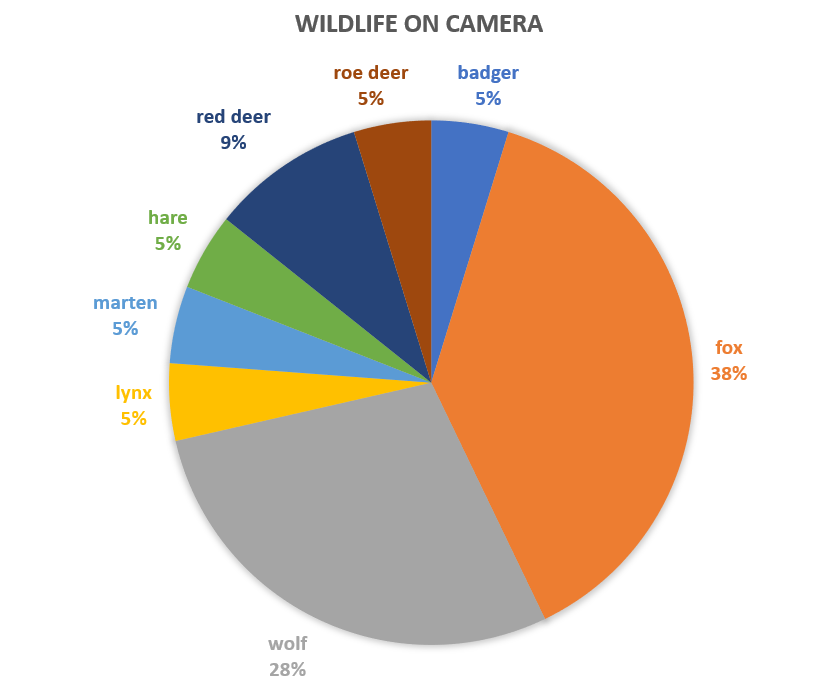
Camera trapping wasn’t our main focus, as we first wanted to learn more about potential core habitats and areas of high use of both wolf and lynx. We had cameras out in the field between 31st of January and 27th of March 2020. In total, our camera traps were out for 77 trap nights in only 4 different locations. We recorded 23 wildlife events of 8 different species.
Read and watch more of our camera trapping footage in this article or check out the youtube videos at the end of the article.
Stories from the field
During the Wild Slovakia winter edition 2019-2020, we had a lot of interesting findings. Here I listed-up some of my highlights.
Trip 1: Finding the 9 pack
Around the Slovensky raj (Slovak Paradise) National Park we were lucky to find wolf tracks. They didn’t look too old and more importantly, there were a lot of tracks. We investigated the area and followed the tracks a bit forward and backwards. Wolves like to walk in each other’s footprints, definitely when there is snow. We looked for places the wolf trail split up and try to estimate the number of wolves in each line. We concluded 9 or 10 wolves, but we were not sure.
The wolves continued on the path and it didn’t take us long until we arrived at a very interesting place. There were even more tracks in different directions. Soon we managed to find some roundish areas of compressed snow. We found a place where the wolves had been resting or sleeping. That was great, now we just had to count the number of bed sites. At that point, we might had already destroyed some of the tracks, but we were confident we had 9 bed sites. This was a similar number that we estimated looking at the tracks earlier.
This was a great finding. We wanted to learn more about such a large pack. We had a general idea about the direction of the pack. The next day We explored some trails in the Slovak Paradise National Park in the hope to find them again. On our walk, we also encounter otter tracks. It took us some time, but we found the wolf tracks again. Although I couldn’t say for sure the tracks were of all 9 individuals together.
If you are wondering how a wolf looks like and how you can recognise it, check out my blog HOW TO RECOGNISE A WOLF. I also go deeper into the tracks of a wolf.

Trip 2: How close to a lynx have we been?
During week 2 it was mostly just me and Hans from BTA. We worked a lot on finalising protocols and methodology. Nevertheless, we had some time to explore more of our study area.
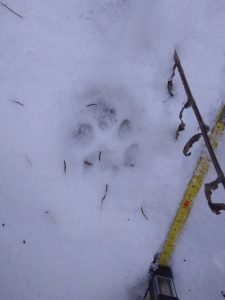
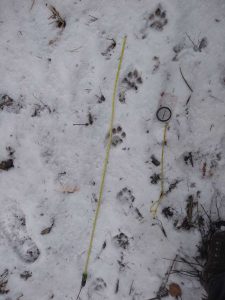
We found multiple wolf tracks. During one of our walks, we were onto wolf tracks while a lynx track was crossing the trail. Next to the trail was a little rocky outcrop where the lynx seemed to head to. I had a quick check and came across a markable sign. I found a lynx scat, partly digged under the snow. Lynxes are a bit more elusive and are not using hiking trails as much as wolves do.
Another day we were heading to a saddle where we expected wolf tracks. On our way there, different wildlife tracks crossed our trail. Near a denser part of the forest, we found a lynx track on the path. We investigated it a little bit and it turned out this lynx came on the trail a bit higher up and started walking for about 5m on the trail in the direction we came from. From the tracks, I could read the lynx stopped, looked, turned around and trotted up the trail for a couple of meters before disappearing in the forest again.
At that point, we were focused on getting to this saddle in search of potential wolf tracks. After leaving this place, my mind started wandering about these lynx tracks. Could it be the lynx turned around because of use? The tracks looked really fresh. Soon we reached the saddle, and we found our wolf tracks. We only could count about 4 individuals though. At the end of this week, I set up my camera trap which I was going to collect during my next trip (trip 3).
Trip 3: Chamois in the High Tatras, finding a kill site and camera trapping
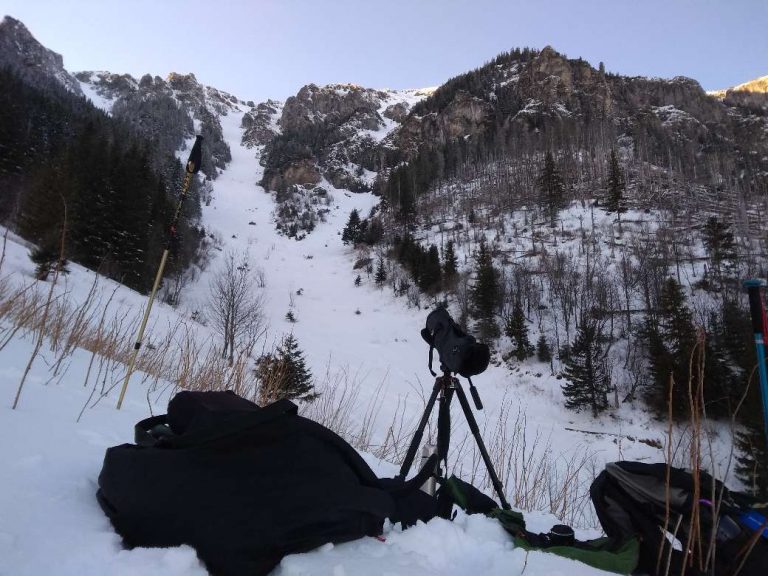
In this trip, we also explored a bit from the High Tatra National Park. We went to look for the chamois who should be still on the rocky bits of the mountains. We started our way up through the forest to a place where we had a good view of the rocky mountain flanks. We were armed with binoculars and a telescope. It took us some time, but we managed to find at least 3 chamois in the end.
We also collected my camera trap which I had put out during trip 2. It was placed on a place where we did encounter wolf tracks in the snow before, and where we hadn’t seen much human activity in the surroundings. Sadly, we also lost one camera trap (probably stolen). If you are interested in the camera trap footage, I made a YouTube compilation.
On our last full day in the field, we found wolf tracks in an area we could follow. On this place, we found several wolf tracks. There seemed to be tracks from different ages and different directions. The older tracks were from a group of 4-5 wolves, whereas the fresh track was a lone wolf. We decided to follow the fresh wolf track up a slope. The snow was partly gone, so we were not making much progress. At some point, we lost the wolf track. We decided to continue on a nearby trail in the direction of the saddle.
After some time, we suddenly notice a set wolf tracks of one wolf back on the path. Soon this one wolf track brought us to a mess in the snow. We straight away saw more wolf tracks, a little older, and 4-5 scats on the path. We were on to something. We explored the area more and I found a pile of deer hair. Yes! We found a kill site. We found a lot more tracks and scats, but I was after more evidence of the kill site. Sadly, there wasn’t much more around. After searching the area more, we found 3 little bone fragments. As it was in the territory of this 9 pack, they probably ate everything. From the tracks, it also looked like they came back multiple times to feed. This lone wolf was just checking the area for any leftovers, but I’m not sure if it found anything worthwhile.
At the end of this walk, we also placed another camera trap for the Bear Tracker Association. The pictures were collected when I was already back in Belgium, but I made a little compilation from this footage as well.
We got lucky and we have our first lynx on the camera. Lynxes have unique coat patterns, which makes it possible to recognise individuals. This is our first lynx on camera. We gave him the name Josef (according to Slovak name day).
Future of Wild Slovakia Project
It was a great collaboration with Bear Tracker Association. We definitely want to continue this project in the future to get a deeper understanding of the wolf ecology. I can’t wait to get back out there in winter and start looking for tracks in the snow again. If this sounds like an interesting experience. Check out the Trips on our activity page.
JOIN IN OUR NEXT WILD SLOVAKIA WINTER SEASON
If winter sounds too cold for you, we are also working on a summer/autumn Wild Slovakia Project.
Follow us on Facebook to stay up to date with offers and wildlife news.

Wildlife Impulse
Wildlife Impulse started as a blog to share experiences in the world of nature awareness and wildlife conservation.
Wildlife Impulse want to inform you about wildlife in different ways. Explore our website to learn more about it.


